28 November 2010


22 November 2010
Evidential Christianity: We cannot help speaking about what we have seen and heard…
Yesterday, Phyllis and I were at New Covenant Church in Valdosta GA. My good friend Randy Stephen spoke briefly from the following passage chronicling the growth of the early Church.
I was reminded of the power of Evidential Christianity – faith that demands an explanation. It is this kind of faith – and God’s gracious response – that makes following Jesus so irresistible.
This is the follow-up story to Peter and John bringing healing in Jesus’ Name to a lame beggar after citing physical poverty but freely giving what they had – a deep and genuine faith in the resurrected Christ.
(Acts 4:7-22) They had Peter and John brought before them and began to question them: "By what power or what name did you do this?"
Then Peter, filled with the Holy Spirit, said to them: "Rulers and elders of the people! If we are being called to account today for an act of kindness shown to a cripple and are asked how he was healed, then know this, you and all the people of Israel: It is by the name of Jesus Christ of Nazareth, whom you crucified but whom God raised from the dead, that this man stands before you healed. He is "'the stone you builders rejected, which has become the capstone. ' Salvation is found in no one else, for there is no other name under heaven
given to men by which we must be saved."
When they saw the courage of Peter and John and realized that they were unschooled, ordinary men, they were astonished and they took note that these men had been with Jesus.
But since they could see the man who had been healed standing there with them, there was nothing they could say. So they ordered them to withdraw from the Sanhedrin and then conferred together. "What are we going to do with these men?" they asked. "Everybody living in Jerusalem knows they have done an outstanding miracle, and we cannot deny it. But to stop this thing from spreading any further among the people, we must warn these men to speak no longer to anyone in this name."
Then they called them in again and commanded them not to speak or teach at all in the name of Jesus.
But Peter and John replied, "Judge for yourselves whether it is right in God's sight to obey you rather than God. For we cannot help speaking about what we have seen and heard."
After further threats they let them go. They could not decide how to punish them, because all the people were praising God for what had happened. For the man who was miraculously healed was over forty years old. (NIV)
Of course, when Christianity becomes mere religion – observing rituals devoid of meaning – and/or mere morality – doing right things just for the sake of being right – then we might not have much to talk about. Having not seen anything or heard any Good News, we might just have to be silent.
Evidential Christianity cries out for explanation!
09 November 2010
Hermeneutics… 10 Commandments (Can you say hermeneutics??)
My friend Skye Jethani (I quote – with his permission - big chunks from his book The Divine Commodity in my book Why God Thinks He Can Use You. That makes us close, right?) just did a cool Ten Commandments of Hermeneutics… Worth reading and thinking about.
10 Commandments of Scripture Interpretation
My (Skye Jethani) simple guidelines for engaging the Bible and avoiding unhelpful controversy.
I. You shall not make for yourself an idol out of Scripture.
This is a particular temptation among evangelicals who hold a very high view of Scripture. We forget that our highest calling is not to have a relationship with the Bible but with Jesus Christ of whom the Bible testifies. (John 5:39)
II. You shall honor the Scriptures as sufficient.
We have a common temptation to get “behind the text” or discover what “really happened.” While archeology and other disciplines are incredibly important, we must not forget that what God has given in the Scriptures is enough for life and faith.
III. You shall remember the metanarrative and keep it wholly.
In my experience more Christians can recap the meta-narrative of the Star Wars saga than can recap the biblical meta-narrative. It’s not enough to know the stories and events in the Bible. We must know how they fit together to tell a single story.
IV. You shall honor the Church as the recipient and the guardian of the Scriptures.
The books and letters in the Bible, with a few exceptions, were not written to individuals but to communities of believers. We must be careful not to read everything through the lenses of Western individualism. And we are wise to listen to how Christians in ages past have understood the teachings of Scripture.
V. You shall not neglect the context.
Proof texting (finding verses to make your point), isolating (removing a text from its surrounding material), and synchronizing (taking different gospel accounts of the same event and smashing them together) are all ways of abusing the text and landing on bad interpretations.
VI. You shall not ask questions the text does not want to answer.
Almost every nasty debate about Scripture results from forcing answers from the text it never intended to answer. Debates about creation in Genesis 1 and 2 fall into this category as do most other scientific issues. Avoid a “morbid interest in controversial questions” (1 Tim 6:4).
VII. You shall embrace both the form and content of Scripture as inspired by God.
When teaching the Bible we often retain the content or message but give little attention to the genre or style of the text. We lose something when we teach narrative as didactic truth, or when we ignore the poetic structure and beauty of a Psalm. And there’s a reason God said “You shall not murder” rather than “You will love life.” Do we see that?
VIII. You shall study Scripture for wisdom and not merely knowledge, and never for pride.
I’m really impressed that you’ve memorized 400 verses and took first prize in your Bible Quiz league. Not quit being such a jerk. (1 Cor. 8:1)
IX. You shall exegete your culture and not merely the Scriptures.
The goal is not merely to understand what the Bible said to those who live centuries ago, but hear it anew today. Proper teaching requires that we bring the Word of God into our world and help people feel the gravity and beauty of it for their lives and context.
X. You shall remember that the simplest interpretation is usually, but not always, correct.
There is no Bible Code! And if you have to do all kinds of contortions with Scripture to get it to fit into your theological framework, you’re probably guilty of something bad. Paradoxes abound in Scripture. If your theology doesn’t allow for that kind of ambiguity and mystery I suggest you try Deism.
28 October 2010
What are you going to do about the Holy Spirit?
It all started with coffee with a pastor friend. He is the leader of a seeker-friendly church meeting in an active movie theater. They are looking to serve twenty/thirty-somethings who are unchurched and reluctant to go to a church building. Hence, meeting in a cinema. When second service is over at 11:15, you have to rush out because they're selling tickets to the movies and the smell of popcorn is tantalizing . The church continues to draw several hundred people, and there are new people coming to Christ who have a very checkered church background, if a church background at all.
So my question was this: "What are you going to do about the Holy Spirit?" And by that I was concerned that there was no real place for new Believers to be introduced to the power and majesty and beauty of the Holy Spirit and His gifts. The church has semester community groups that attempt to move Believers into community and each one has a flavor. But there's not one that moves toward baptism in the Holy Spirit as an experience.
And I understand this. In our church world there is so much hullabaloo about the Holy Spirit and who He is that it often looks and sounds like a circus. You can turn on the TV and whoa! you can witness first-hand extremes - in teaching and practice - concerning the Holy Spirit. And from a TV screen (no matter how big), it can look and 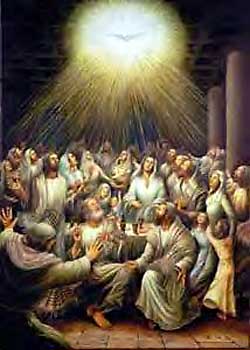 sound rather bizarre.
So, Pastor Bobby looked at me and said, "Why don't you help us? Why don't you develop a two day retreat where teaching is about the Holy Spirit? And we could do it a couple of times a year. And maybe some other churches like ours could have you come and do it for them..."
So Phyllis and I put together The Encounter Weekend - around ten hours of teaching about the New Covenant, the Holy Spirit, forgiveness, baptism in the Holy Spirit, the Lordship of Christ, and praying in the Spirit.
We began on Friday night and continue on Saturday with Subway sandwiches for lunch together and time in the afternoon for prayer and "giving room" for the Holy Spirit to touch people. We charged ten dollars to cover lunch and some handouts.
Phyllis and I, Scott and Carolyn Ongalo and Brian Hassett did our first Encounter Weekend last week. Brian led worship and Scott and Carolyn were both intercessors and ministers. It was a great time as gently the Holy Spirit ministered to those present.
Angel - one of the participants wrote:
Pastor Bobby, I just wanted to give praise and thanks to Glenn and Phyllis for doing the Encounter Weekend at the Annex. I learned so much about "The Power of Forgiveness" and "Who is the Holy Spirit?" which helps me to draw closer to Him as I continue to grow spiritually in my walk. It's amazing how you thirst for the Truth when you're there. I wasn't really expecting to learn so much, however, as we were opening our Bibles and reading scriptures from the Old Testament to the New, and reading prophesies and what the Bible says about being Baptized in the Spirit, it's funny but I thought I'd be totally overwhelmed, but instead, I got it... I understood, it wasn't weird or mind boggling... it was the TRUTH. Anyhow, I just wanted to thank the Hatcher's for doing the class. $10 was too cheap... it was worth at least $125. :)
Few things thrill me more than when someone "get's it!" Just plain get's it - and then decides to walk in that truth.
Pastor Bobby says he wants people to go from being seekers to Spirit-empowered followers of Jesus. And we're excited and blessed to use the gifts and experiences the Lord has given us to help make it happen.
It's kinda what we live for in our "people development" lives...
09 October 2010
You can quote me on this...
We’ve been told we are limited by what we don’t know – our ignorance.
They were wrong.
We are not limited by what we don’t know, only by what we know.
Or think we know.As soon as we think we know, we stop searching and that knowledge becomes a wall; a wall to keep in what we know and a wall to keep out new information…
29 September 2010
The President Talks of his faith...
The President said recently that he was a Christian by choice rather than by heritage and culture.
Now I know that this will set some of my good friends on fire, because they wonder how you can have some of the policies this President has and still be a Christian. But when I read the NY Times report (excerpted below) President Obama says the same thing that most Christians are supposed to say. Or actually he says it better. He's not talking about heaven and hell, good works or abominations but about personal sinfulness, God’s grace, caring for others and salvation. Sounds like he’s talking about my Jesus.
Here’s some of what the NYT says:
But the religion question was perhaps the most revealing for the president – and also perhaps the most welcome, given that polls show that the public appears confused about his religion, with some 18 percent of Americans believing, erroneously, that he is Muslim.

“I’m a Christian by choice,” the president said. “My family, frankly, they weren’t folks who went to church every week. My mother was one of the most spiritual people I knew but she didn’t raise me in the church, so I came to my Christian faith later in life and it was because the precepts of Jesus Christ spoke to me in terms of the kind of life that I would want to lead. Being my brothers and sisters’ keeper, treating others as they would treat me, and I think also understanding that Jesus Christ dying for my sins spoke to the humility we all have to have as human beings, that we’re sinful and we’re flawed and we make mistakes and we achieve salvation through the grace of God.”
We live in a complicated world. It’s a world where Christianity is a matter of intellectually giving credence to the right things. Presidents, politics and culture seem to complicate things. You’d think following Jesus would be clear. Bill Clinton claimed to have been born again as a boy in a tent-meeting. George W. Bush claimed to have become a transformed Methodist after being an alcoholic partier. They both had their moments when we wondered, and some are still wondering.
My concern is that whether the President says it, a TV preacher says it or the guy next to me in church says it - being a Christian is more than just ticking off the right beliefs. It’s more than fast-forwarding to the bottom of a software installation and ticking “I accept.”
Being a Christian is an ongoing supernatural experience of continual transformation. Being a Christian is living supernaturally from internal motivations of love and sacrifice because the Holy Spirit is living inside us, guiding us and assisting us in living beyond ourselves and not for ourselves.
I am follower of Jesus by choice, but also by encounter. When I supernaturally encountered Jesus by the Holy Spirit in college, He changed my life, my direction, my allegiance, my motivations. Some in “one fell swoop” but most in increments of choosing and letting go. Some things almost forty years later, I still struggle with. Some things pop up like an uninvited obscene relative and I have to – by the grace and power of God – deal with them. Some things are long gone.
Honest to God Christianity moves from head to heart to hands and feet. Transformed thought to transformed motives to redemptive actions. I encounter, I believe, I act.
Living supernaturally natural in a blood and guts world is a feat only God would expect of us! But then again He supplies the ability.
14 September 2010
My new word...
quo·tid·i·an [kwoh-tid-ee-uhn]
– adjective
1. daily: a quotidian report.
2. usual or customary; everyday: quotidian needs.
3. ordinary; commonplace: paintings of no more than quotidian artistry.
4. (of a fever, ague, etc.) characterized by paroxysms that recur daily.
– noun
5. something recurring daily.
6. a quotidian fever or ague.
Origin:
1300–50; < L quotīdiānus, cottīdiānus daily, equiv. to cottīdi ( ē )every day (adv.) ( *quot ( t ) ī a locative form akin to quot however many occur, every + diē, abl. of diēs day; cf. meridian) + -ānus -an; r. ME cotidien < OF < L, as above
— Related forms
quo·tid·i·an·ly, adverb
quo·tid·i·an·ness, noun
Based on the Random House Dictionary, © Random House, Inc. 2010
And now to see it used in a sentence...
"Spirituality now wanders from sex to drugs to art to revolution to violence —whatever seems to promise deliverance from the quotidian."
Mason Cooley (whoever he is...)